
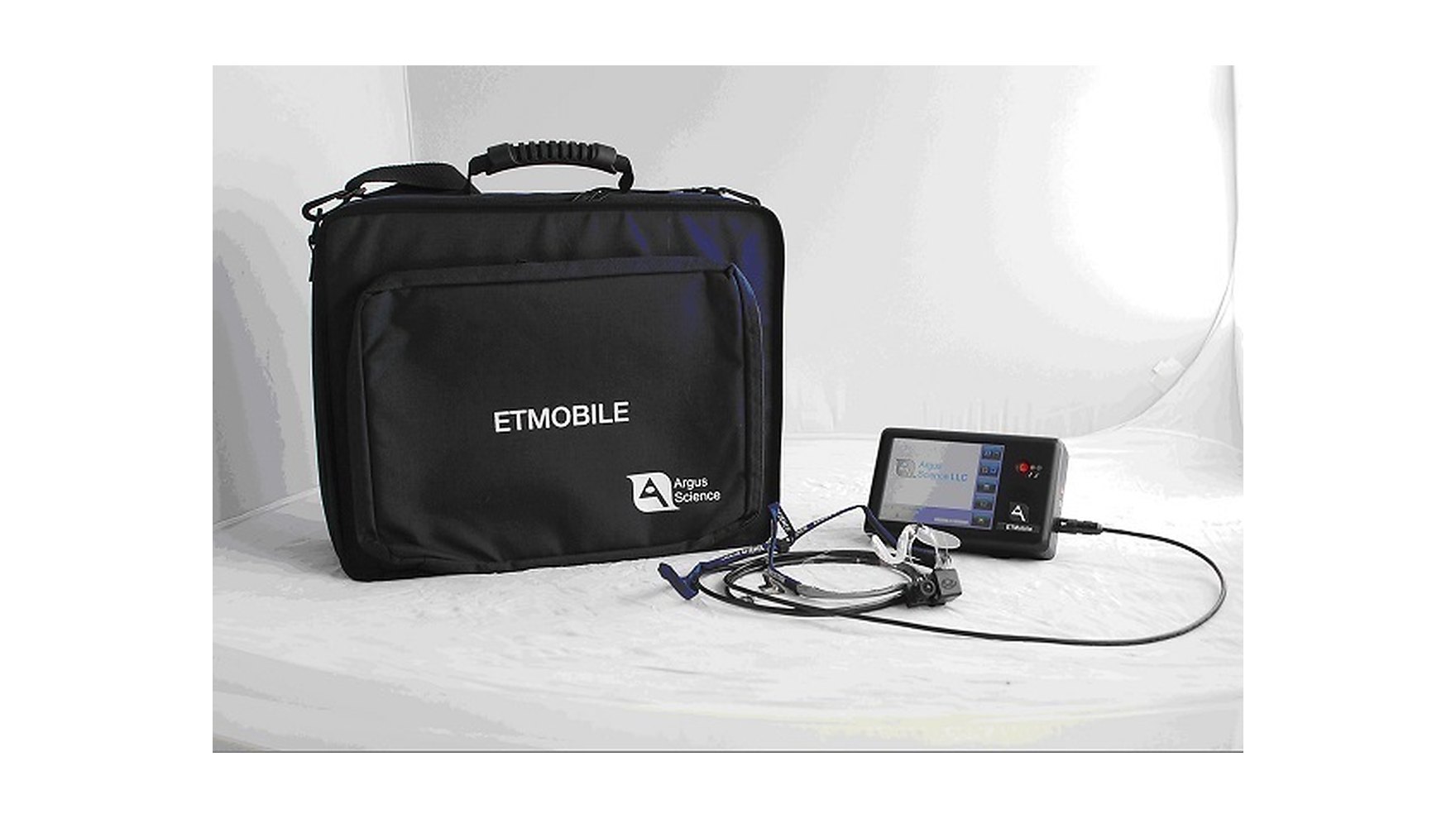
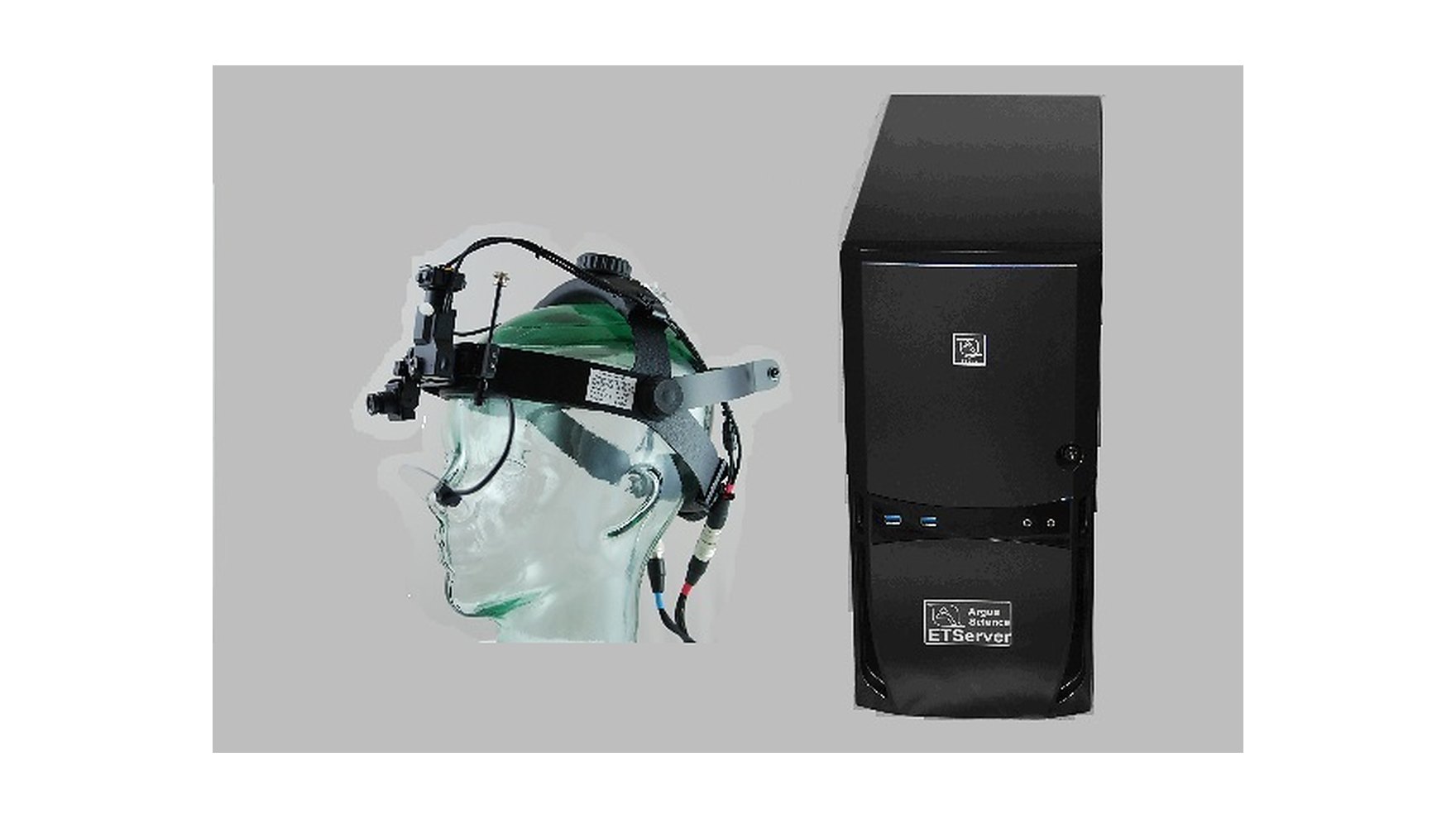
ETMobile, ETServer, SceneMap and the Applied Science Laboratories instruments before them. No longer sold. Still supported by the people who built them.
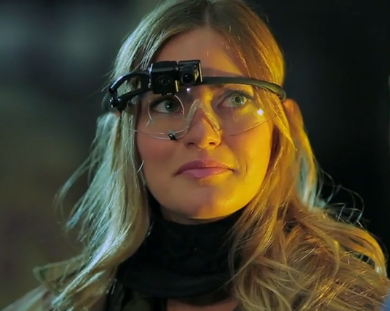
Lightweight untethered glasses for unconstrained movement over large areas, at 30 or 60 Hz. Built for the US Army and Navy programs among others. No longer sold (Replaced by ETVision); still serviced while parts remain available.
The earlier ET3Space configurations. Head position from an external motion capture system combined with eye data to give line of gaze in room coordinates and point of gaze on up to 20 stationary surfaces. Supported head trackers included NDI, Advanced Realtime Tracking, Vicon, Qualisys and Polhemus. The current version of this capability is ET3Space on ETVision.
The previous-generation stationary system. Replaced by the newer and more capable ETVision. Supported and repaired while parts remain available.
Scene mapping for ETAnalysis. Located the scene camera in an environment using SLAM, so gaze could be analysed against objects without a separate head tracker. Still supported. For most studies, Moving Areas of Interest in ETAnalysis or ET3Space now do the same job better.
Applied Science Laboratories eye trackers from four decades of production. Contact Argus for options.
ASL Results, GazeMap, Gazetracker, Eyehead Integration and Interact. We can advise on data recorded with these, and on moving older recordings into ETAnalysis.
Manuals, brochures and installers for the legacy systems are in the Download Center. If what you need is not there, ask. We have more on file than is posted.
Tell us the model and what it is doing. We will tell you honestly whether it is worth repairing.
Contact us