Not a dot on a video. ET3Space is a spatial computing platform for human attention: which real object a person is attending to, where it sits in the room, and how that attention evolves.
ET3Space turns eye tracking into a true spatial computing signal. It combines gaze from ETVision with 6DoF head position from an integrated motion-capture device, then computes the line of sight and where it meets real surfaces in the room.
The result moves past 2D gaze analysis into real spatial perception analytics: measure, analyze, and model human attention directly inside a physical environment.
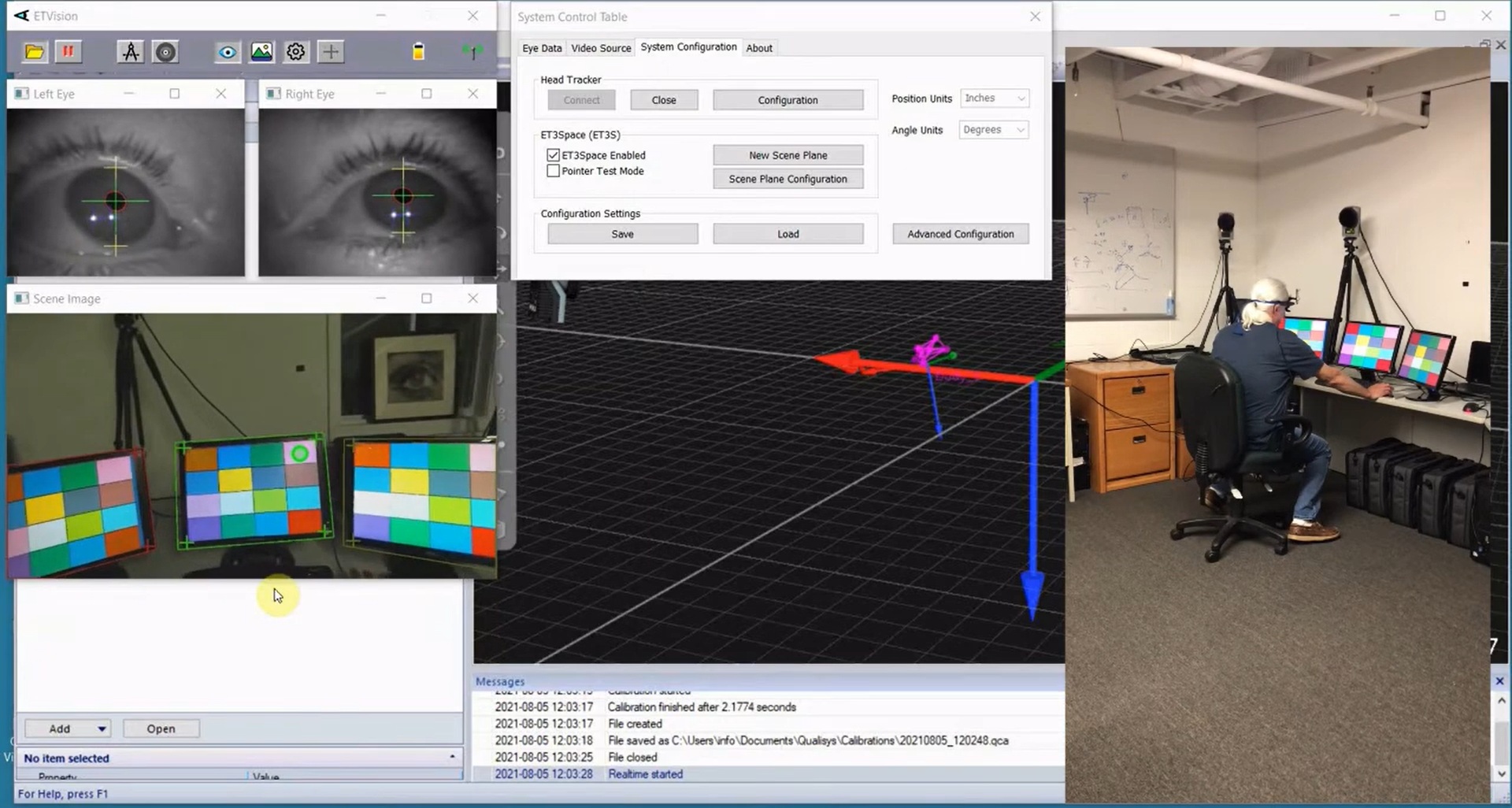
A real-time, human-in-the-loop spatial computing system in six layers.
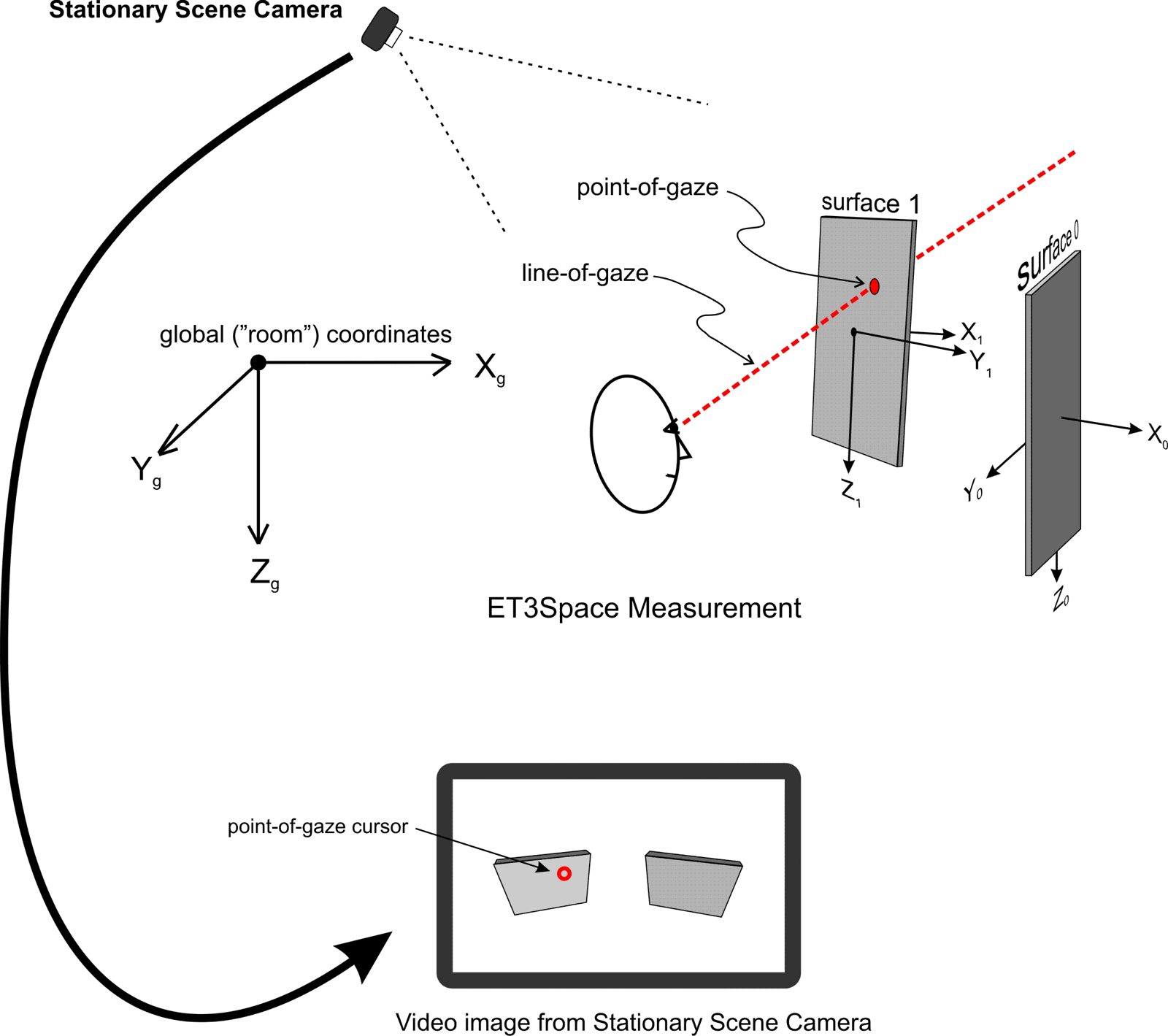
Captures gaze direction relative to the head.
Motion capture provides head position and orientation in a global coordinate system.
Computes the line-of-sight vector and its intersection with real-world surfaces.
A digital twin of real-world Environment (surfaces, displays, controls) in a structured 3D space.
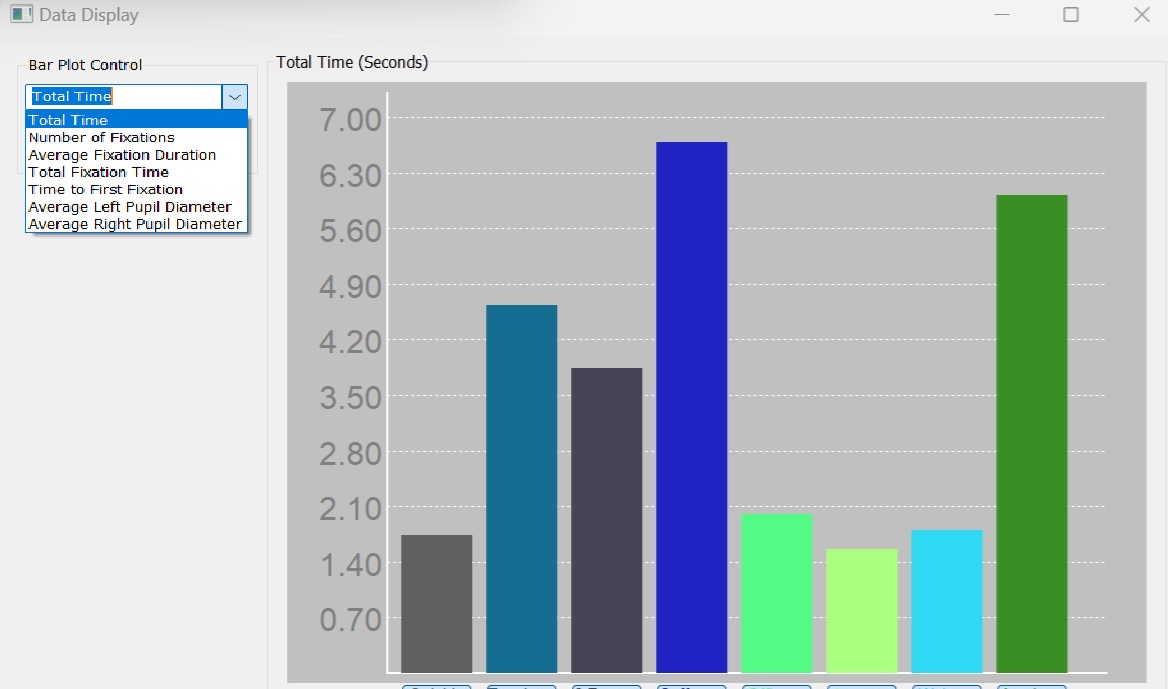
Tracks attention on surfaces of interest and shows change live with bar plots.
ET3Space decodes attention patterns on surfaces of interest in a real environment and displays them with real-time bar plots.
A continuous, time-synchronized stream of spatial data:
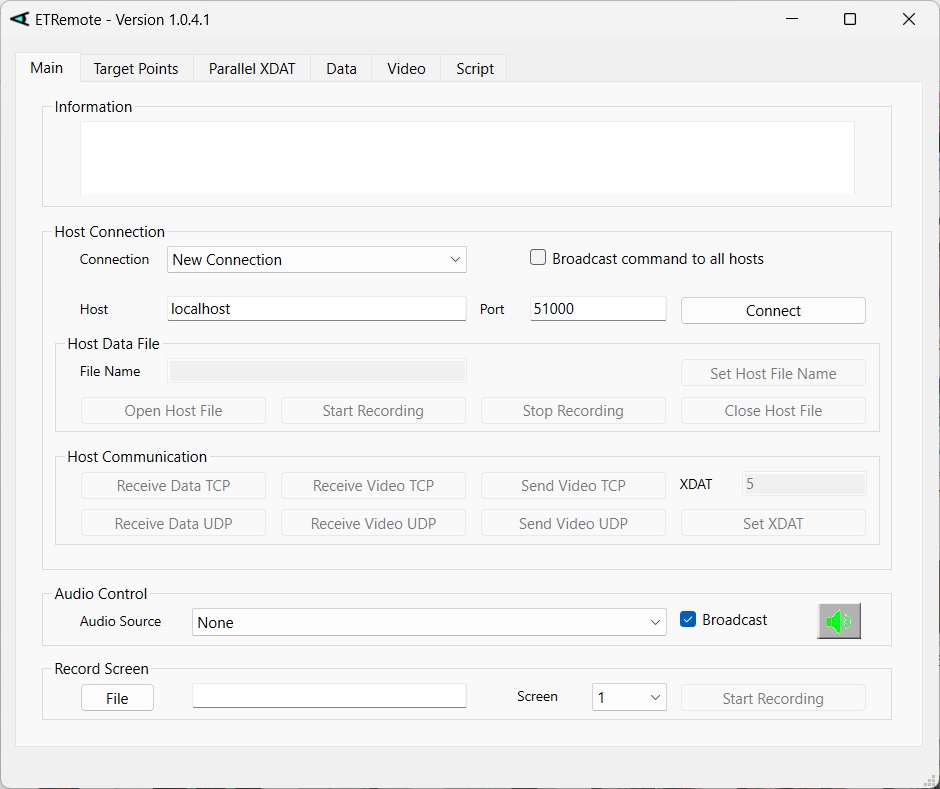
ET3Space builds a lightweight digital twin of both the environment (surfaces, displays, controls) and the user's attention (gaze mapped into space).
Surfaces are defined with a couple of clicks on the scene image, for rapid deployment in complex environments.
Bridges physical and virtual worlds, supports attention-aware interfaces and human-centered digital twins.
Provides ground truth for AI perception models, and integrates with simulation environments (flight, driving, control rooms) and physical AI systems.
Track many spatial targets at once:
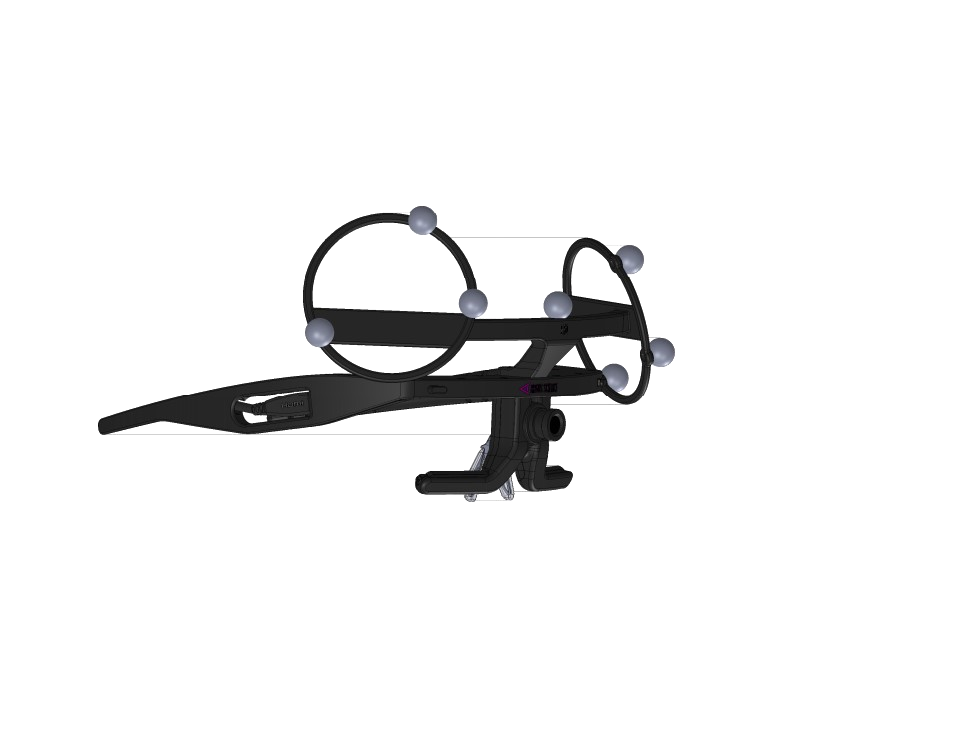
Choose the motion-capture technology that fits your environment. Our engineers help you match it. An array of reflectors on the ETVision frames lets optical systems measure head position and orientation.




NDI, Advanced Realtime Tracking (ART), OptiTrack, Vicon, Qualisys, and others.
How gaze is placed on real objects in a room, and what a world model has to contain for that to work.
Seven questions that decide which wearable eye tracker fits a study, including the cases where the answer points elsewhere.
Prescription glasses, cloud processing, accuracy, motion capture, and support for legacy ASL systems.
Tell us about your environment and we will scope an ET3Space configuration for it.
Schedule a demo